Master core techniques, prep like a pro, season boldly, and control heat.
You can learn How to Cook Like a Professional Chef with clear steps, smart habits, and focused practice. I have run dinner rushes, taught new cooks, and built systems that work at home. In this guide, I share the mindset, tools, and methods that raise your food fast. Read on, and I will show you How to Cook Like a Professional Chef in a way that feels simple and real.

The pro mindset and mise en place
Chefs do not wing it. They plan. Mise en place means everything in its place. It is the way pros set up gear, prep, and space before heat hits a pan. How to Cook Like a Professional Chef starts with this mindset.
Do these steps before you cook.
- Read the full recipe. Visualize each move.
- Gather tools. Pull pans, bowls, boards, and towels.
- Prep all ingredients. Wash, cut, measure, and group by step.
- Set a clean zone for raw items and a safe zone for cooked food.
- Place a trash bowl and a damp towel by your board.
Benefits are huge. Cooking feels calm. Food cooks on time. Fewer mistakes happen. Clean up gets easy too.

Essential tools and pantry staples
You do not need a big set. You need the right few things. Tools matter when learning How to Cook Like a Professional Chef.
Start with these:
- An 8 to 10 inch chef’s knife. Keep it sharp.
- A small paring knife.
- A large cutting board that does not slide.
- A 10 to 12 inch stainless or cast iron skillet.
- A heavy pot for soups, grains, and pasta.
- Tongs, a fish spatula, ladle, and a whisk.
- An instant read thermometer.
Stock a smart pantry.
- Kosher salt and flaky sea salt.
- Fresh black pepper.
- Neutral oil for high heat and extra virgin olive oil for finish.
- Acid boosters like lemons, limes, and vinegar.
- Umami builders like tomato paste, soy sauce, miso, and anchovies.
- Aromatics like garlic, onions, shallots, and fresh herbs.
- Starches like rice, pasta, and potatoes.
Knife skills and prep speed
Knife skill is control. It saves time and boosts safety. Knife skills are core in How to Cook Like a Professional Chef.
Grip the blade, not the handle base. Pinch the blade with thumb and index finger. Wrap the rest on the handle. Use your guide hand as a claw. Tuck fingers in. Let your knuckles guide the blade.
Practice drills help.
- Slice an onion into even cubes.
- Cut carrot sticks, then small dice.
- Mince a pile of herbs with smooth, light strokes.
- Time yourself. Aim for clean and even, then add speed.
Keep edges sharp. Hone often. Sharpen as needed. A sharp knife slips less and cuts clean.
Heat, pans, and perfect doneness
Heat is your paintbrush. Control it and food sings. Heat control is central to How to Cook Like a Professional Chef.
Know your zones.
- High heat sears and browns.
- Medium heat sautés and reduces.
- Low heat simmers and melts.
Preheat pans until a drop of water skitters. Dry protein well. Salt it. Add oil, then the food. Do not crowd the pan. Browning comes from the Maillard reaction. That is sugar and amino acids changing under heat. It builds deep flavor.
Aim for safe and ideal doneness.
- Chicken breasts and thighs reach 165°F in the center.
- Pork chops and roasts reach 145°F, then rest.
- Fish flakes at 135 to 140°F, but food safety points to 145°F.
- Steaks vary by taste. Pull earlier than target and rest.
Resting matters. Juices settle. Texture improves. Five to ten minutes can change a dish.
Quick PAA-style answers on heat
What pan should I use for searing?
Use stainless or cast iron. Preheat it well and do not move the food too soon.
Why does my food steam instead of brown?
Your pan is crowded or not hot enough. Cook in batches and dry the surface.
How much oil should I use?
Enough to coat the pan in a thin, even film. Add more only if the food looks dry.

Seasoning, flavor building, and balance
Season early and often. Taste at each step. Seasoning and flavor building teach you How to Cook Like a Professional Chef.
Work in layers.
- Salt raw items lightly.
- Bloom spices in warm fat to wake aroma.
- Brown to make fond, the tasty bits on the pan.
- Deglaze with wine, stock, or vinegar to lift flavor.
- Finish with acid or fresh herbs to brighten.
Think in taste balance.
- Salt sharpens taste.
- Acid lifts and cuts fat.
- Sweetness rounds bitter edges.
- Fat carries aroma and gives body.
- Heat from chili adds spark.
Small tweaks work fast. A squeeze of lemon on greens. A splash of soy in a stew. A dab of butter in a pan sauce.

Sauces and finishing touches
A quick sauce can make a simple dish feel pro. Sauces will speed your path in How to Cook Like a Professional Chef.
Try a basic pan sauce.
- Sear meat and remove it.
- Pour off extra fat.
- Add shallots or garlic. Cook until soft.
- Deglaze with wine. Scrape fond. Reduce by half.
- Add stock. Reduce until it coats a spoon.
- Whisk in cold butter to finish. Adjust salt and acid.
Learn simple emulsions.
- Vinaigrette is oil and acid whisked with a bit of mustard.
- Aioli is garlic mayo.
- Beurre blanc is a butter sauce with wine and shallot.
Finish strong.
- Add fresh herbs, lemon zest, or good olive oil.
- Use flaky salt for crunch.
- Add a drizzle that echoes the main flavors.
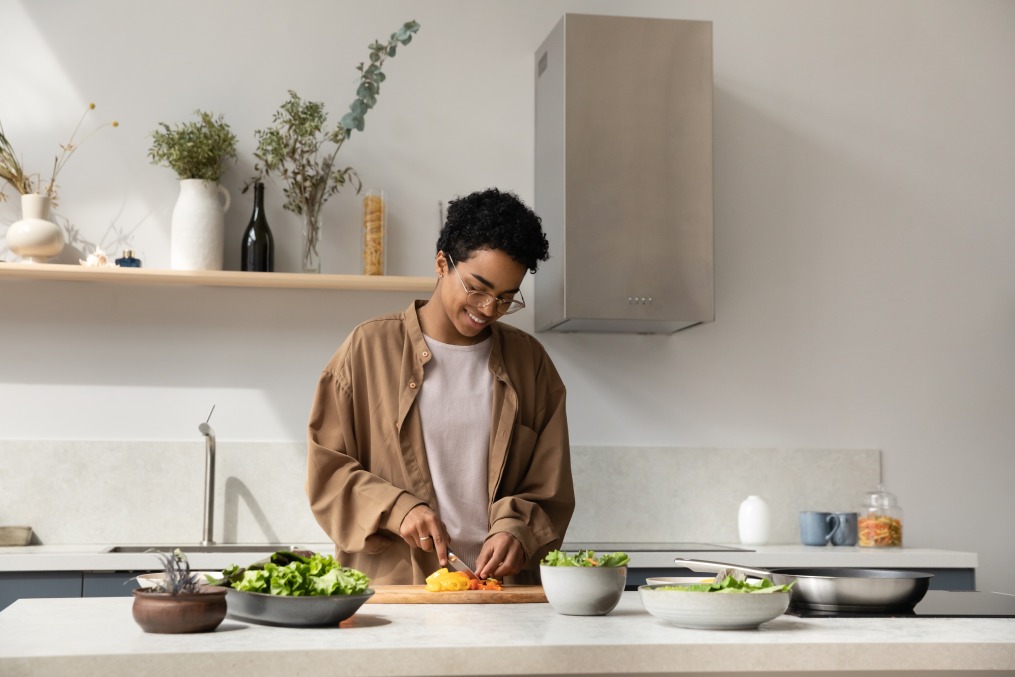
Plating, texture, and timing
We eat with our eyes first. Plate with intention, not fuss. Plating is part of How to Cook Like a Professional Chef.
Keep it simple.
- Use a warm plate for hot food.
- Give each item space.
- Build height with a base and a lean.
- Use odd numbers for small items.
Think texture. Add crunch, cream, and snap. A toasted crumb on soft fish. Pickled onions on rich pork. A crisp salad next to braised meat.
Time is flavor. Fire the slow items first. Hold sauces warm. Garnish at the end so herbs stay bright.
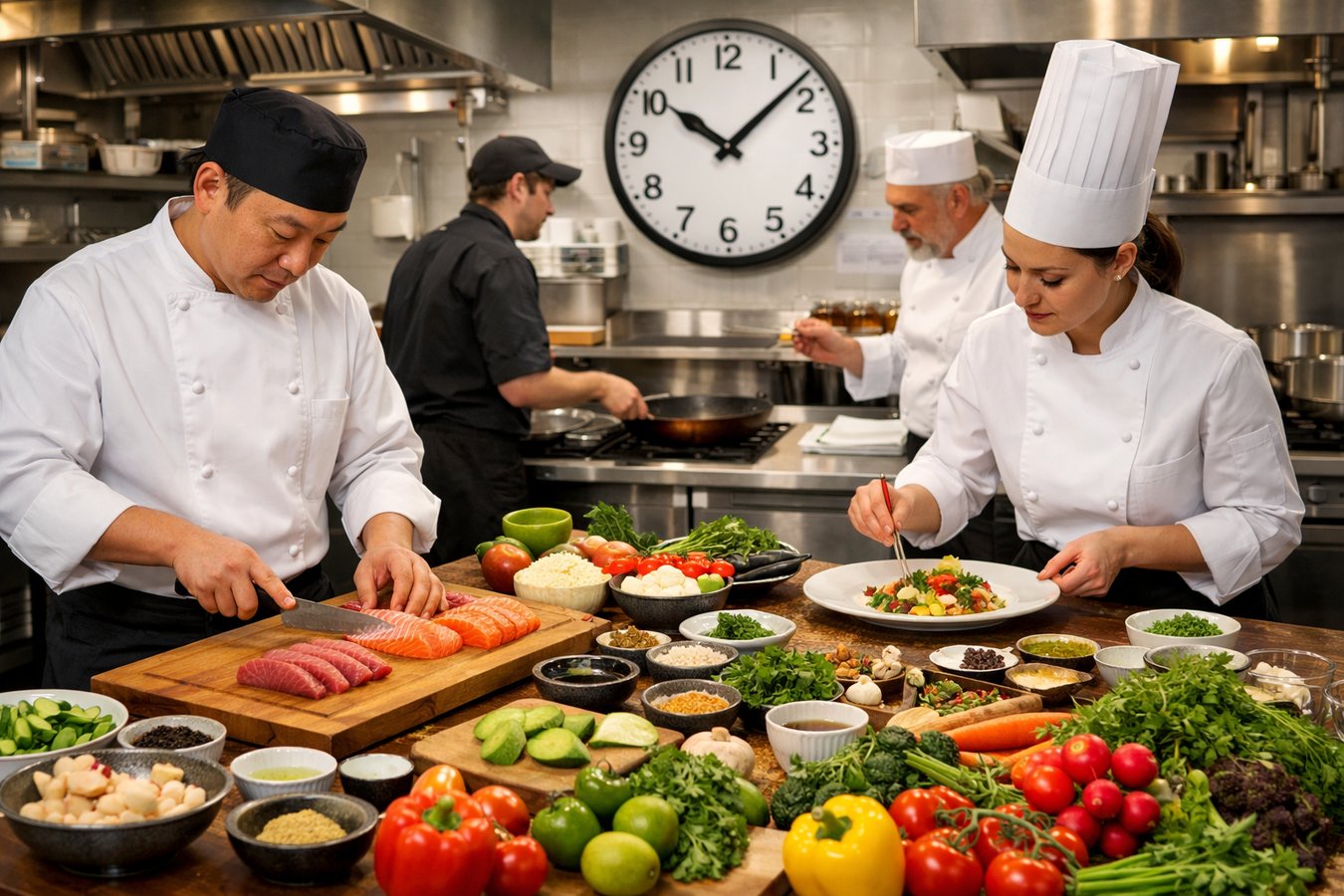
Clean-as-you-go, safety, and efficiency
Pros move clean. That keeps food safe and the kitchen calm. Clean-as-you-go is vital for How to Cook Like a Professional Chef.
Set rules that stick.
- Wipe your board often.
- Keep raw and ready-to-eat apart.
- Swap or sanitize boards and knives after raw meat.
- Wash hands before and after each task.
- Use separate towels for hands and for counters.
Mind temperatures.
- Cold foods stay at or below 40°F.
- Hot foods stay at or above 140°F.
- Do not leave food in the danger zone for more than two hours.
Use timers. Label everything. Date your prep. Small habits prevent big problems.
A 7-day practice plan to cook like a professional chef
Use this plan to practice How to Cook Like a Professional Chef. Keep notes each day. Track wins and misses.
Day 1: Knife basics
- Learn the pinch grip.
- Dice onions and carrots.
- Store herbs the right way.
Day 2: Heat and sear
- Sear chicken thighs.
- Make a quick pan sauce.
- Rest and slice.
Day 3: Veg mastery
- Sauté greens until bright.
- Roast root veg until edges brown.
- Finish with acid and herbs.
Day 4: Starches
- Make perfect rice.
- Cook al dente pasta and emulsify with sauce water.
- Pan-roast potatoes.
Day 5: Fish night
- Pan-sear salmon or cod.
- Learn spoon basting with butter.
- Serve with a lemony herb sauce.
Day 6: Flavor lab
- Build a stew with fond, deglaze, and reduction.
- Adjust salt, acid, and heat at the end.
- Add a fresh crunchy topper.
Day 7: Plating and timing
- Plan a two-course meal.
- Fire items in order.
- Plate clean and garnish with purpose.
Troubleshooting and common mistakes
Everyone makes errors. Use these fixes to learn How to Cook Like a Professional Chef.
Food is bland
- Add salt first. Then add acid. Taste again.
Meat is dry
- You overcooked or cut too soon. Pull earlier and rest longer.
Soggy veggies
- Your pan was crowded. Cook in batches. Dry veg before roasting.
Broken sauce
- It got too hot or too thin. Take it off heat. Whisk in cold butter or a splash of water to bring it back.
Greasy mouthfeel
- Add acid or a fresh herb. Serve with a crisp side for contrast.
Frequently Asked Questions of How to Cook Like a Professional Chef
What is the fastest way to improve at home?
Focus on knife skills and heat control. Prep first, then cook with a hot pan and taste as you go.
Do I need expensive gear to cook like a pro?
No. A sharp chef’s knife, a solid pan, and an instant read thermometer go far. Technique beats gadgets.
How do chefs season food so well?
They season in layers and taste often. They also use acid at the end to make flavors pop.
How can I practice How to Cook Like a Professional Chef with little time?
Batch your prep once a week and cook quick meals on weeknights. Use one-pan methods and pan sauces.
What is the secret to perfect sear?
Dry the surface, preheat the pan, and do not crowd. Let a crust form before you flip.
Conclusion
You now have the mindset, tools, and steps that pros use each day. Put them to work with small, steady practice. Try one new habit per meal and build from there. If you want to master How to Cook Like a Professional Chef, sharpen your knife, control heat, season with care, and keep moving clean.
Ready for the next step? Pick one drill from the 7-day plan and start tonight. Share your results, ask questions, or subscribe for more chef-level lessons.