Empty it, wash shelves, wipe interior with mild cleaner, and sanitize seals.
If you want a fresh, odor-free kitchen, learning How to Clean a Refrigerator is a must-have skill. I’ve cleaned hundreds of fridges for clients, rentals, and my own home, and I’ve learned what works in the real world. In this guide, I’ll show you How to Clean a Refrigerator fast, safe, and deep, with simple steps, pro tips, and smart habits you can trust.

What You’ll Need Before You Start
Gather supplies first. This saves time and keeps food safe.
- Microfiber cloths or soft sponges. Avoid rough pads.
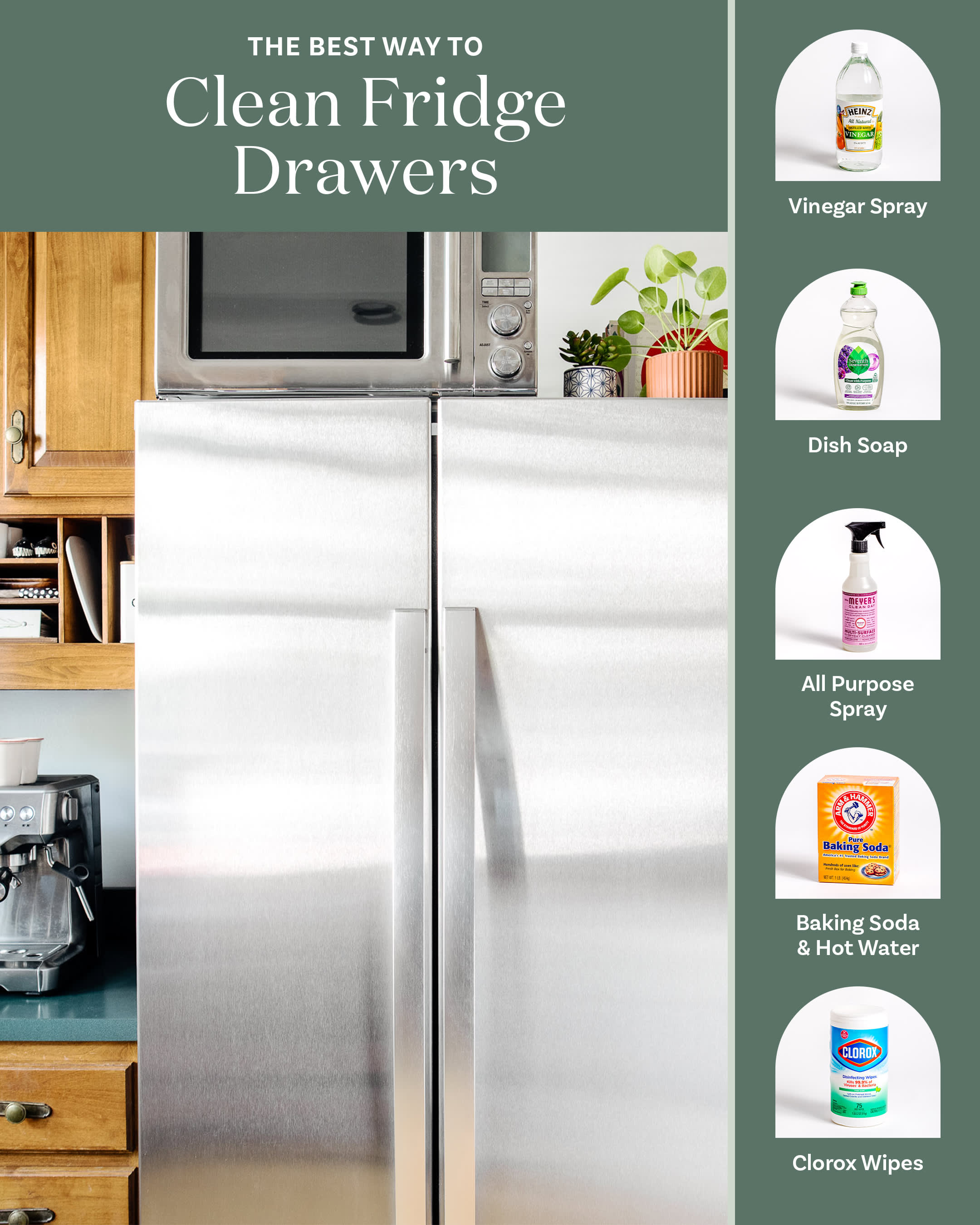
- Dish soap, white vinegar, baking soda.
- A food-safe disinfectant for spills.
- A small brush or old toothbrush.
- A bucket or large bowl with warm water.
- Trash bags, recycling bags, and labels.
- Optional: activated charcoal or coffee grounds for odor.
- Optional: stainless steel cleaner for doors.
Prep your space. Clear the sink, make room on the counter, and power the fridge to a colder setting 30 minutes ahead. This helps keep food safe while the door is open. If you plan a very deep clean, unplug it. Knowing these basics is step one in How to Clean a Refrigerator the right way.

Step-by-Step: How to Clean a Refrigerator
Use this simple flow. It keeps food cold and cuts your time in half.
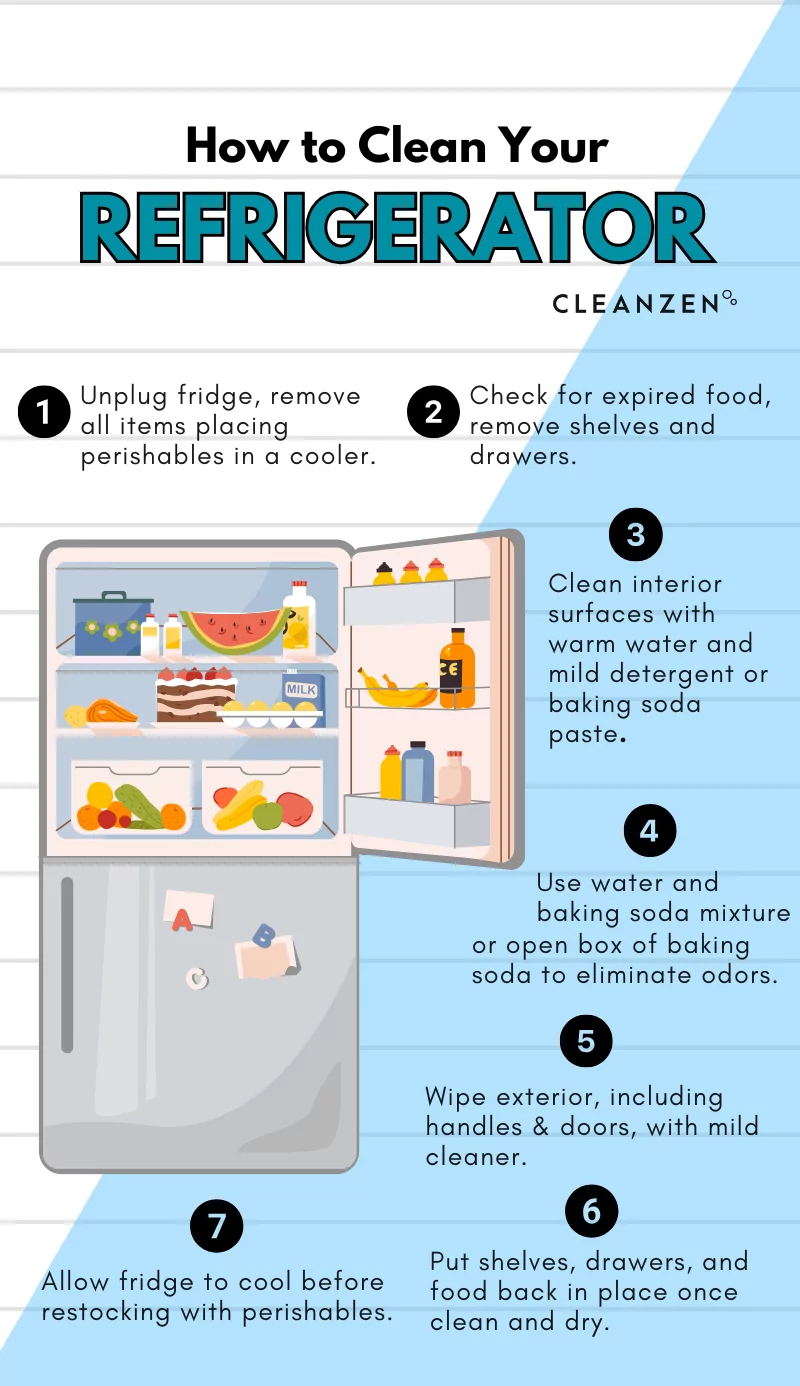
1) Empty and sort
- Remove items shelf by shelf.
- Toss expired food. Set good items in a cooler with ice packs.
- Group by type. Keep raw meat in a leak-proof bag.
2) Remove shelves and drawers
- Let glass shelves warm to room temp before washing. Sudden heat can crack glass.
- Slide out crispers, bins, and door racks.
3) Wash parts in the sink
- Use warm water and a few drops of dish soap.
- Rinse well and air-dry. Do not rush with hot water on cold glass.
4) Clean the interior walls
- Mix 2 cups warm water with 2 tablespoons baking soda. It lifts grime and neutralizes odors.
- Wipe top to bottom. Rinse cloth often.
- For sticky spots, lay a warm, soapy cloth on the area for 2 minutes, then wipe.
5) Disinfect after raw spills
- Use a food-safe disinfectant, or 1 tablespoon liquid bleach in 1 gallon of water.
- Apply, wait 5 minutes, then wipe and rinse with clean water.
6) Clean the door seals
- Dip a cloth in warm, soapy water. Wipe the gasket folds.
- Use a soft brush for crumbs in grooves.
- Dry well to prevent mold.
7) Clear the drain hole and drip area
- If your model has a drain hole, use a cotton swab to remove sludge.
- Check the drip pan under the fridge. Empty and wash if reachable.
8) Wipe the exterior
- For stainless steel, use a microfiber cloth and clean along the grain.
- For handles, use soapy water, then disinfect. Handles harbor germs.
9) Clean the coils
- Unplug the fridge.
- Use a coil brush and a vacuum with a narrow tool.
- Clean coils once or twice a year to improve cooling and cut energy use.
10) Dry, reassemble, and restock
- Dry all shelves and bins fully.
- Put parts back in place.
- Restock by zones. Keep raw meat on the lowest shelf in a tray. Use clear bins.
11) Set temperature and final checks
- Set the fridge to 37–40°F. Set the freezer to 0°F.
- Run your hand along the gasket. Ensure it seals well.
- Add an odor absorber like baking soda or charcoal.
This is How to Clean a Refrigerator like a pro: simple tools, smart order, and safe temps. I use the same method on move-out cleans to pass the toughest inspections.
Deep-Clean Tasks and Schedules
A routine keeps grime from turning into a chore.
- Weekly quick reset. Toss old food. Wipe small spills right away.
- Monthly mini clean. Wipe shelves, seals, and handles. Replace odor absorber if needed.
- Every 3–4 months. Full clean inside and out. Remove bins and wash. Check the drain and drip pan.
- Twice a year. Clean condenser coils and the back wall. This helps cooling and lowers bills.
With a steady rhythm, How to Clean a Refrigerator becomes a 30-minute task, not a weekend job.

Natural Cleaners vs. Commercial Products
Both can work if used right.
-
Natural cleaners
- Vinegar and water cuts grease and light mineral film.
- Baking soda paste (3:1 soda to water) lifts stuck food.
- Pros: low cost, low scent, safe on most surfaces.
- Limits: less effective on heavy biofilms or strong stains.
-
Commercial cleaners
- Choose food-safe sprays marked for kitchen or refrigerator use.
- Great for sanitizing handles and raw meat spills.
- Avoid abrasive powders that scratch plastics.
Safety notes:
- Never mix bleach and vinegar or ammonia. It creates toxic gas.
- Test any new product on a small hidden area first.
Use what fits the mess. In my experience, baking soda handles 80% of jobs. Disinfectant is for the other 20%. That balance is key in How to Clean a Refrigerator without damage.
Odor Removal and Mold Prevention
Smells come from spills, old food, and hidden moisture.
-
Neutralize odors
- Keep an open box of baking soda on a shelf.
- Use activated charcoal or dry coffee grounds in a small bowl.
- Wipe spills fast. Odor grows with time and heat.
-
Stop mold
- Dry shelves and gaskets after cleaning.
- Keep the fridge at 37–40°F. Warm fridges breed mold.
- Do not block air vents with boxes or tall jars.
-
Track humidity
- Use crisper settings. High humidity for greens. Low for fruits.
- Too much moisture leads to slime and odors.
Apply these habits, and How to Clean a Refrigerator turns into How to Keep It Fresh.

Food Safety and Organization Tips
Good order means less waste and fewer smells.
-
Use zones
- Top shelves for ready-to-eat foods.
- Middle shelves for dairy, eggs, and leftovers.
- Bottom shelf for raw meat in a leak-proof tray.
- Drawers for produce. High humidity for leafy greens. Low for berries and apples.
- Door for condiments and juices. It is the warmest spot.
-
Storage times
- Leftovers last 3–4 days at 40°F or below.
- Cooked meats last 3–4 days.
- Opened deli meats last about a week. Check the label.
-
Label and rotate
- Use labels with the date. First in, first out.
- Keep a small “eat first” bin.
This layout prevents cross-contamination and helps you master How to Clean a Refrigerator with less stress next time.
Mistakes to Avoid When You Clean Your Fridge
Avoid these common errors. I learned many the hard way.
- Using hot water on a cold glass shelf. It can crack by thermal shock.
- Skipping the gasket. Dirty seals cause leaks and higher power use.
- Spraying cleaner into vents. It can freeze up fan blades or sensors.
- Leaving wet parts to “dry in place.” Trapped water fuels mold.
- Ignoring the coils. Dusty coils mean poor cooling and noise.
- Overfilling the fridge. Airflow drops and temps rise.
Dodging these slips makes How to Clean a Refrigerator faster and safer.
Troubleshooting Common Issues After Cleaning
If something feels off, check these fixes first.
-
Fridge not cooling well
- Wait 24 hours after a deep clean. Doors were open, and temps need time.
- Check vents for blockages. Verify temp settings.
-
Water on shelves
- Ensure shelves and bins are seated right.
- Clear the drain hole with a cotton swab.
-
Bad smell remains
- Remove and wash the drip pan if your model has one.
- Place activated charcoal on two shelves. Replace in a week.
-
Door not sealing
- Clean gaskets again. Rub a thin film of petroleum jelly on the hinge side if needed.
- Check for overstuffing near the door bins.
Follow this checklist and you’ll refine How to Clean a Refrigerator into a smooth routine.
Frequently Asked Questions of How to Clean a Refrigerator
How often should I deep clean my refrigerator?
Aim for every 3–4 months for a full clean. Do a quick wipe and toss old items weekly.
What temperature should my fridge be?
Keep the fridge at 37–40°F and the freezer at 0°F. This range helps food safety and prevents odors.
Can I use bleach inside the fridge?
Yes, for raw meat spills or mold. Use 1 tablespoon of bleach per gallon of water, apply for 5 minutes, then rinse well.
How do I remove strong fish or curry smells?
Wash with baking soda solution, then set bowls of activated charcoal inside for a week. Replace bowls every few days.
Is vinegar safe on all fridge surfaces?
It is safe for most plastics and glass. Avoid prolonged contact with rubber parts and always test a small area first.
Do I need to unplug the fridge to clean it?
Unplug for coil cleaning or when washing areas near electrical parts. For a light interior clean, keeping the door open briefly is fine.
How can I stop mold in my vegetable drawer?
Dry the drawer after washing, use produce bags, and set the drawer to high humidity for greens. Check and toss slimy leaves fast.
Conclusion
A clean fridge protects your food, your wallet, and your time. Empty, wash, wipe, sanitize, and set the right temp, and you’ve nailed How to Clean a Refrigerator the smart way. Build a simple schedule, fix spills fast, and your fridge will stay fresh all year.
Ready to put this into action? Pick a 30-minute window this week, follow the steps, and enjoy a cleaner kitchen. Want more home care guides like How to Clean a Refrigerator? Subscribe and share your best tip in the comments!