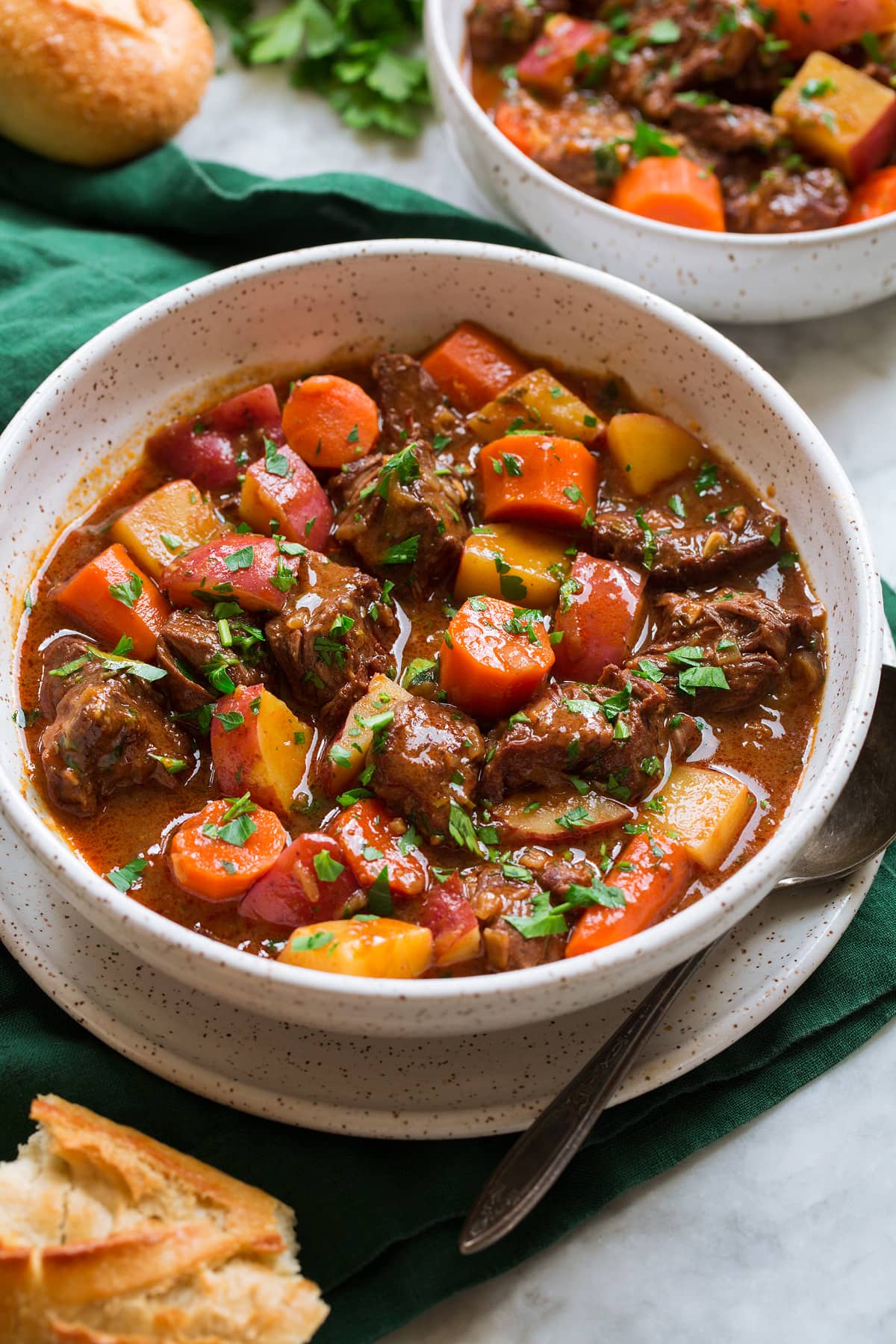
Brown beef, deglaze the pot, then simmer low and slow until tender.
Beef stew is comfort in a bowl. I have cooked it for years in busy home kitchens and calm weekend kitchens. In this guide, I show you How to Cook Beef Stew with clear steps, science, and simple tips. You will learn what to buy, what to avoid, and how to fix slips fast. Read on, and your next pot will be deep, rich, and silky.
How to Cook Beef Stew: What Makes a Great Stew
A great stew has layers. First comes deep browning. Then comes slow heat to soften tough cuts. Last comes smart seasoning to lift the broth.
Beef stew shines when collagen melts to gelatin. That magic gives body and a smooth feel. Browning makes the fond that sets the base. Deglazing pulls that flavor into the sauce.
Good stew is not a rush job. Low and slow wins. Gentle heat keeps the meat juicy. It also keeps the broth clear and clean.
Key Ingredients and Best Cuts
The cut matters more than the cut name. Choose beef with fat and collagen.
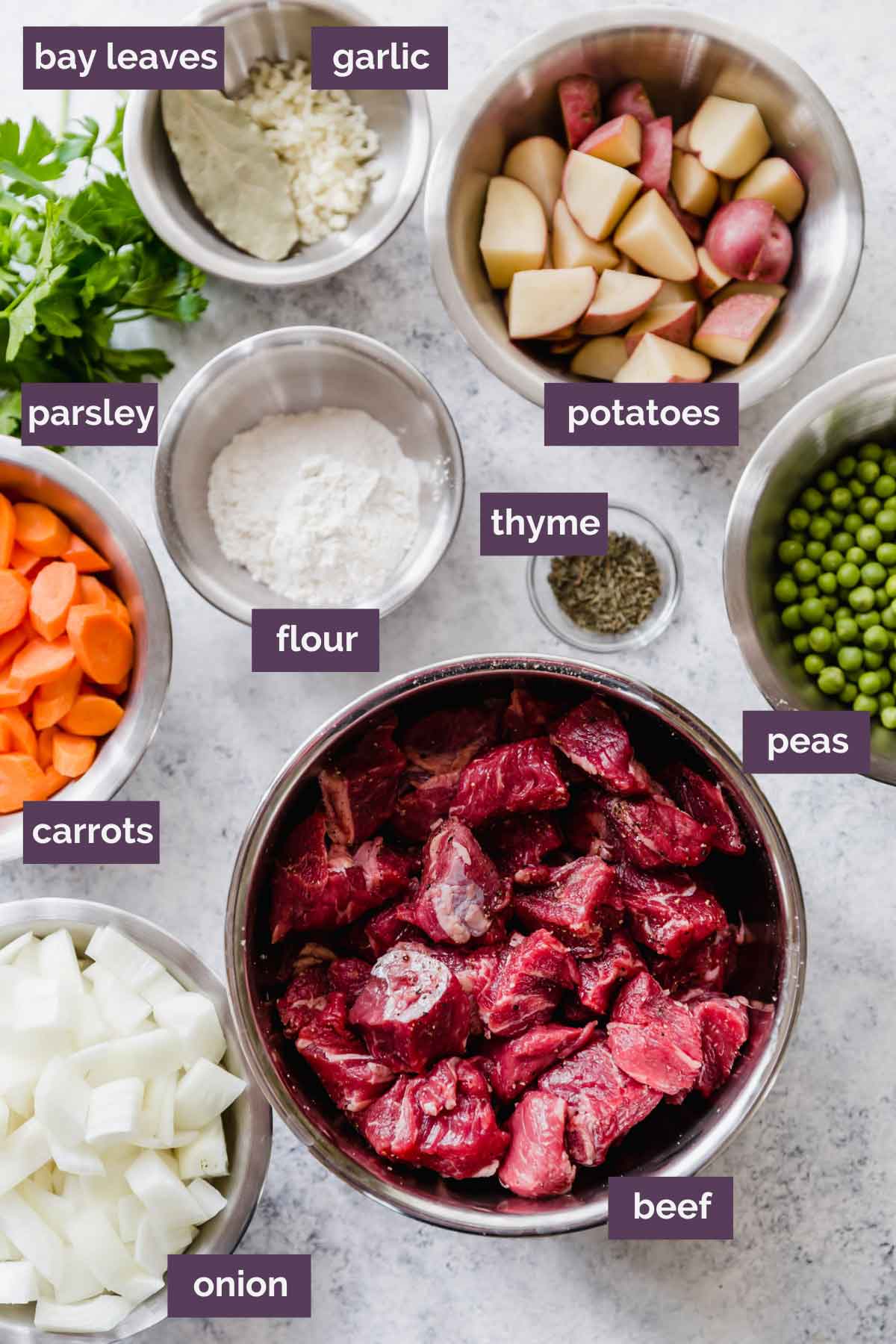
- Chuck roast or shoulder. Affordable, well marbled, and tender when slow cooked.
- Beef shank. Loads of collagen. Great body and rich flavor.
- Boneless short rib. Higher fat. Very tender and lush.
- Brisket (point). Works well, but trim well to avoid grease.
Other core items build balance.
- Aromatics. Onion, carrot, celery, and garlic.
- Liquid. Beef stock, water, wine, or stout. Use one or mix.
- Acid. Tomato paste, wine, balsamic, or vinegar to brighten.
- Herbs. Bay leaves, thyme, rosemary, or parsley stems.
- Umami boosts. Tomato paste, mushrooms, soy sauce, or Worcestershire.
- Thickeners. Flour, cornstarch, or reduce by simmer.
Skip very lean cuts like round. They dry out. Cut cubes about 1.5 inches so they cook even.
Tools and Prep
You do not need fancy gear. You do need a heavy pot and some patience.
- Dutch oven or heavy pot with lid. It holds heat and browns well.
- Sharp chef’s knife and board. Safe, clean cuts.
- Tongs and a wooden spoon. Easy flip and fond control.
- Paper towels. For patting beef dry.
- Optional tools. Slow cooker or pressure cooker for busy days.
Before you start, set out all items. Pat beef dry. Salt it. Chop the veg. Open the stock. This calm step saves you later.

How to Cook Beef Stew: Step-by-Step Method
- Prep the beef. Trim hard fat and silver skin. Cut into 1.5-inch cubes. Pat dry and salt.
- Dust, if using. Toss beef with a light coat of flour. Shake off excess.
- Heat the pot. Add oil over medium-high heat until it shimmers.
- Brown in batches. Sear beef on all sides. Do not crowd. Set aside.
- Soften aromatics. Add onion, carrot, and celery with a pinch of salt. Cook until soft and golden.
- Add tomato paste. Stir until it darkens. This deepens flavor.
- Deglaze. Pour in wine, stout, or stock. Scrape up the fond.
- Build the pot. Return beef and juices. Add garlic, herbs, and enough liquid to just cover.
- Simmer low. Bring to a gentle simmer. Cover partway.
- Cook until tender. On stovetop: 2 to 2.5 hours. In oven at 325°F: 2 to 2.5 hours.
- Add veggies later. Add potatoes and extra carrots for the last 45 minutes so they do not mush.
- Finish and season. Remove herbs. Skim fat. Add soy or vinegar to brighten. Salt and pepper to taste.
Taste, rest 10 minutes, then serve. That rest helps flavors settle.
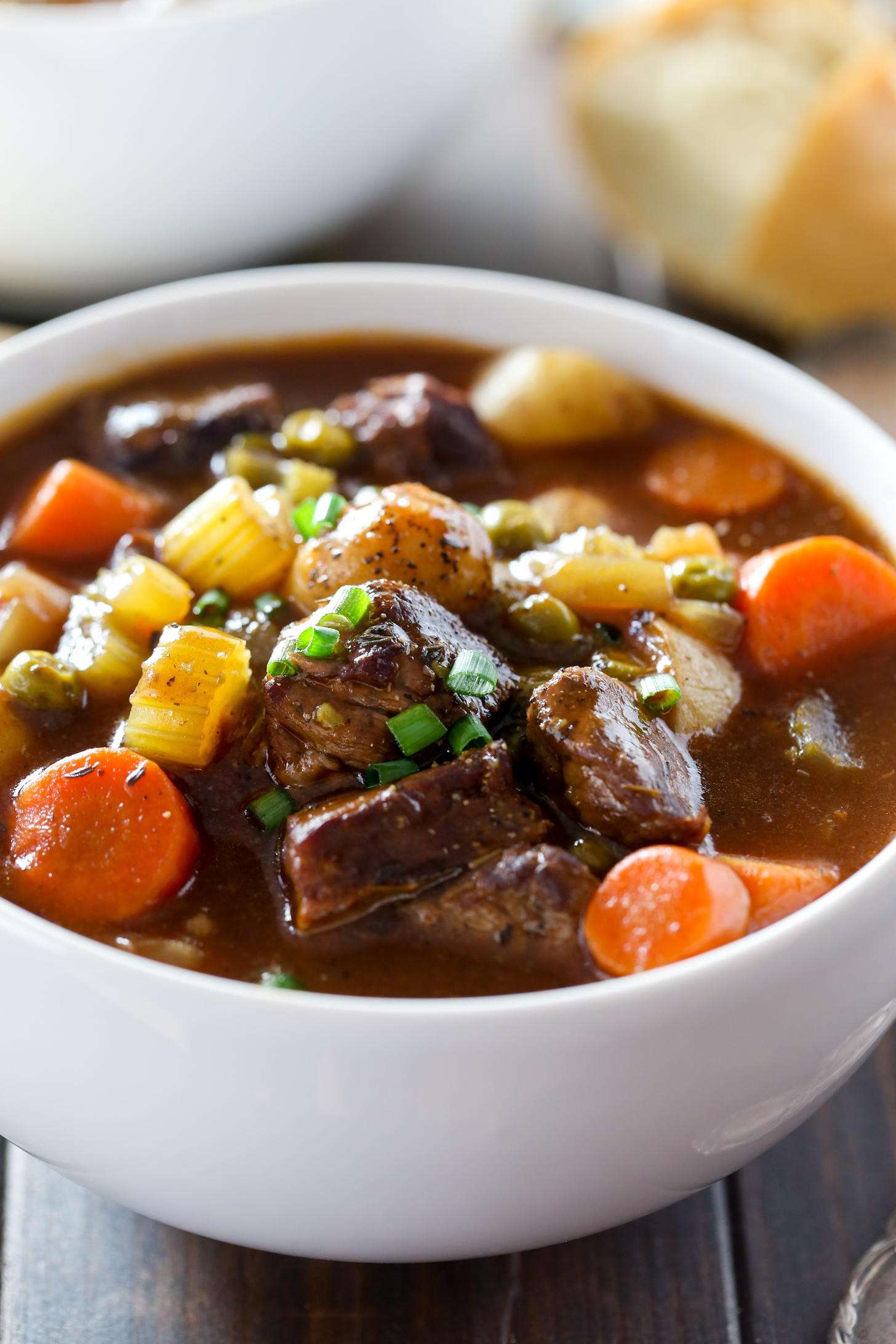
Browning, Deglazing, and Simmering Science
Browning makes hundreds of new flavor notes. This is the Maillard reaction. It needs dry surfaces and steady heat. Wet beef will steam, not brown.
Fond is the brown layer on the pot. It is pure flavor. Deglaze with wine, stout, or stock to pull it up. Tomato paste also helps it dissolve.
Gentle simmer is key. Keep the surface barely moving. Hard boils can toughen meat and make the broth cloudy. Collagen melts best in the 170–190°F range.
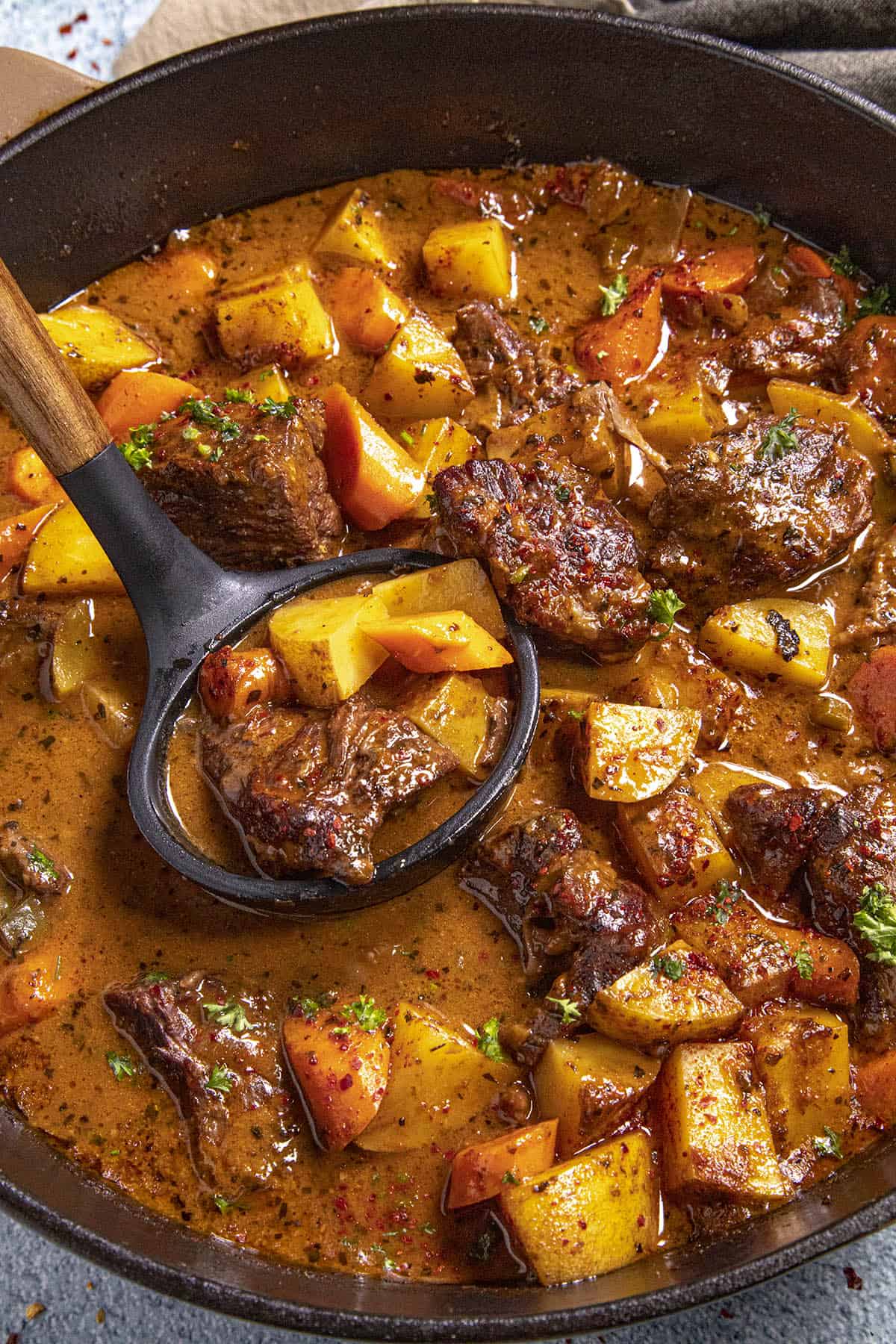
Timing, Temperature, and Doneness
How to Cook Beef Stew means knowing when to stop. Time guides you. Tenderness tells you.
- Stovetop simmer. 2 to 2.5 hours, very low heat.
- Oven braise at 325°F. 2 to 2.5 hours, lid slightly ajar.
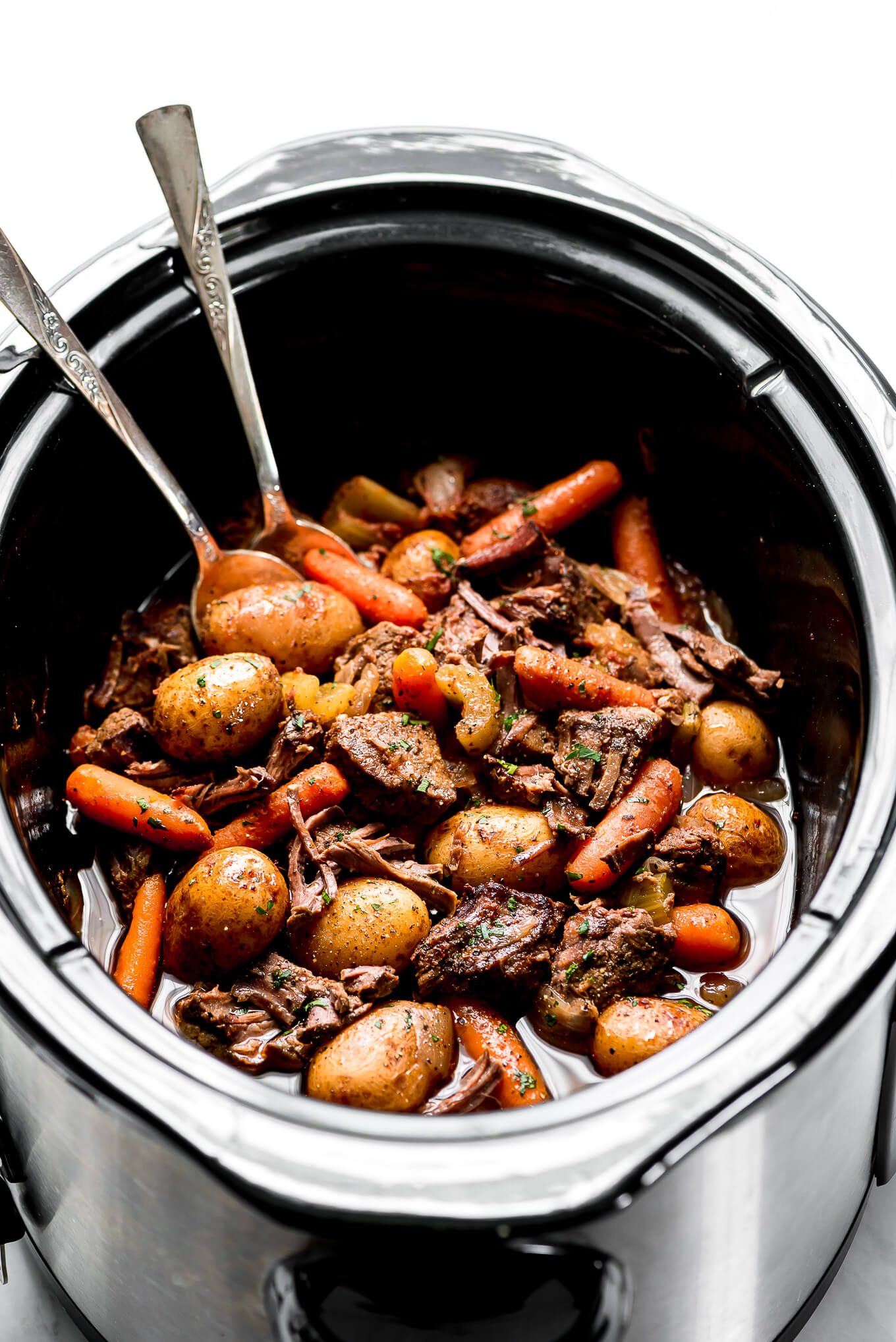
- Slow cooker. Low for 8 to 9 hours, or high for 4 to 5 hours.
- Pressure cooker. High pressure for 30 to 40 minutes. Natural release 15 minutes.
Doneness test: A fork should slide in and twist with little push. Potatoes should be tender but hold shape. For safety, handle raw beef cleanly, and reheat leftovers to 165°F.
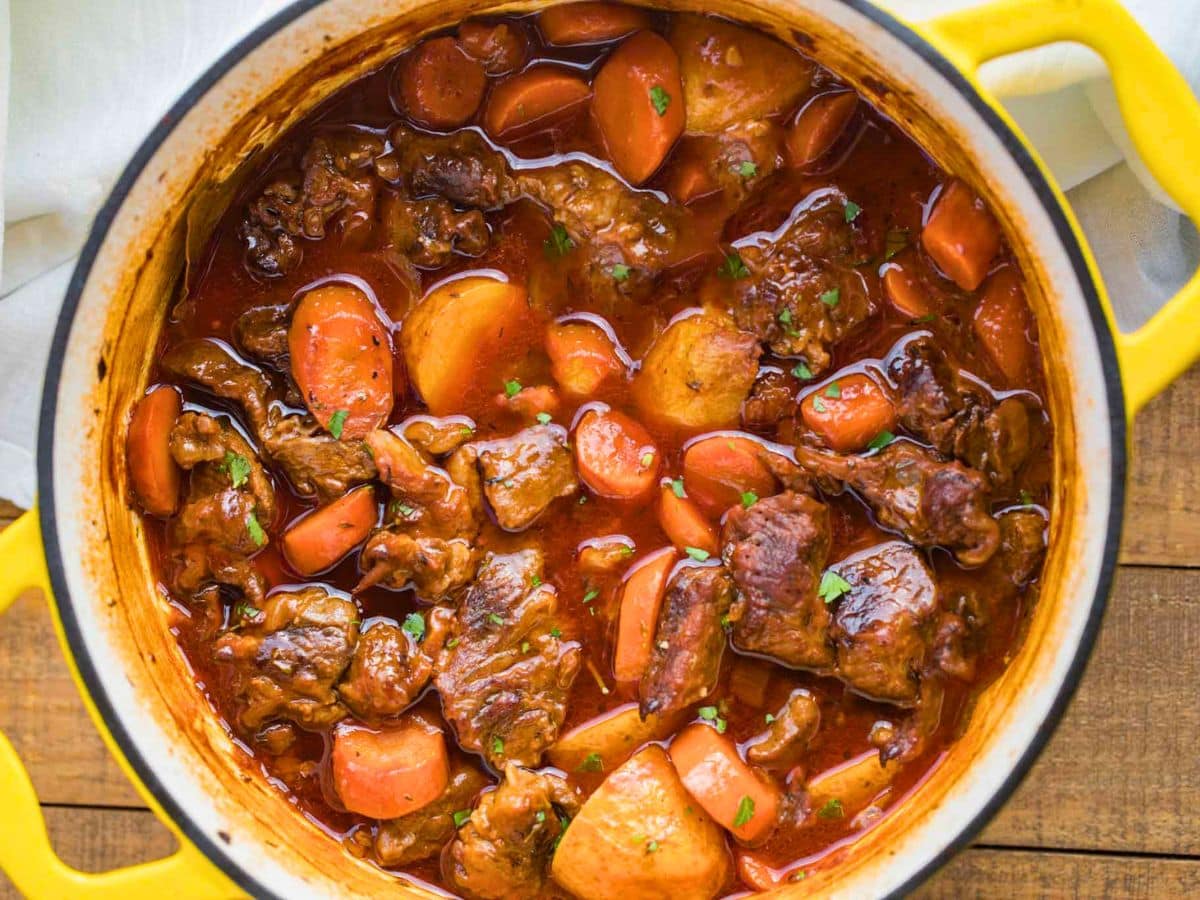
Variations and Flavor Swaps
How to Cook Beef Stew also means you can riff. Try these easy spins.
- Classic wine. Brown beef, add tomato paste, deglaze with red wine, finish with thyme.
- Stout and bacon. Use stout, add crisp bacon, and a splash of vinegar at the end.
- Mushroom umami. Use mixed mushrooms, soy, and a pinch of dried porcini.
- Tomato-forward. Add crushed tomatoes and smoked paprika.
- Herb and lemon. Use rosemary and finish with lemon zest and parsley.
- Global twists. Add curry powder and coconut milk, or try ancho chili and cumin.
Diet tweaks are simple. For gluten-free, skip flour and reduce longer. For low-sodium, use low-salt stock and season at the end.
:max_bytes(150000):strip_icc()/__opt__aboutcom__coeus__resources__content_migration__serious_eats__seriouseats.com__recipes__images__2016__10__20161017-pressure-cooker-American-beef-stew-13-8388620dfb46491ba4f669813545700b.jpg)
Sides, Storage, and Reheating
Stew loves a cozy side. Keep it simple.
- Mashed potatoes, buttered noodles, or rice.
- Polenta, roasted roots, or crusty bread.
- A bright salad or tangy slaw to cut the richness.
Cool leftovers fast. Store in the fridge for 3 to 4 days. Freeze up to 3 months. Reheat gently on low until hot. Add a splash of water or stock if thick.
Troubleshooting and Common Mistakes
Tiny tweaks can save a pot. Here is what to do next.
- Meat is tough. Keep simmering. You are not there yet. It will soften as collagen melts.
- Sauce is thin. Simmer uncovered to reduce. Or whisk a cornstarch slurry and stir in.
- Burnt bits. If the fond smells bitter, stop and swap pots. Do not scrape burnt parts back in.
- Too salty. Add unsalted stock, a knob of butter, or more potatoes. Then simmer.
- Too greasy. Chill and lift the fat cap, or blot with paper towels.
Nutrition and Food Safety Notes
Beef stew can be hearty and smart. Trim extra fat. Load up on carrots, celery, and mushrooms. Use low-sodium stock. A typical serving runs 350–550 calories, based on cut, fat, and sides.
Keep it safe. Wash hands and boards after raw beef. Do not leave stew out for more than 2 hours. Chill in shallow containers. Reheat to a rolling simmer or 165°F. Alcohol does not fully cook off, so keep that in mind for kids.
Frequently Asked Questions of How to Cook Beef Stew
What cut of beef is best for stew?
Choose chuck roast for the best mix of flavor and fat. Shank or short rib also work well for rich, tender stew.
Can I make beef stew without wine?
Yes. Use beef stock and a spoon of soy or Worcestershire. Add a splash of vinegar or lemon at the end for brightness.
How do I thicken beef stew?
Reduce by simmering uncovered until it coats a spoon. Or use a cornstarch slurry and simmer for 2 minutes.
Why is my beef stew meat tough?
It needs more time at a low simmer. Collagen has not melted yet, so keep cooking until fork-tender.
Can I make beef stew in a slow cooker?
Yes. Brown the beef first for flavor, then cook on low for 8 to 9 hours. Add tender veggies in the last 1 to 2 hours.
How to Cook Beef Stew for meal prep?
Make a big batch, chill fast, and store in portions. Reheat gently with a splash of stock to keep it silky.
Do potatoes overcook in stew?
They can if added too soon. Add them in the last 45 minutes for stovetop or the last 2 hours for slow cooker.
Conclusion
You now know How to Cook Beef Stew like a pro. Brown well, deglaze smart, and simmer low until the beef turns silky. Season late, brighten at the end, and serve hot with a simple side.
Ready to cook tonight? Pick a cut, grab a pot, and follow the steps. Share your pot in the comments, ask a question, or subscribe for more easy, proven home recipes.